Socket Management
Tooth out. What now?
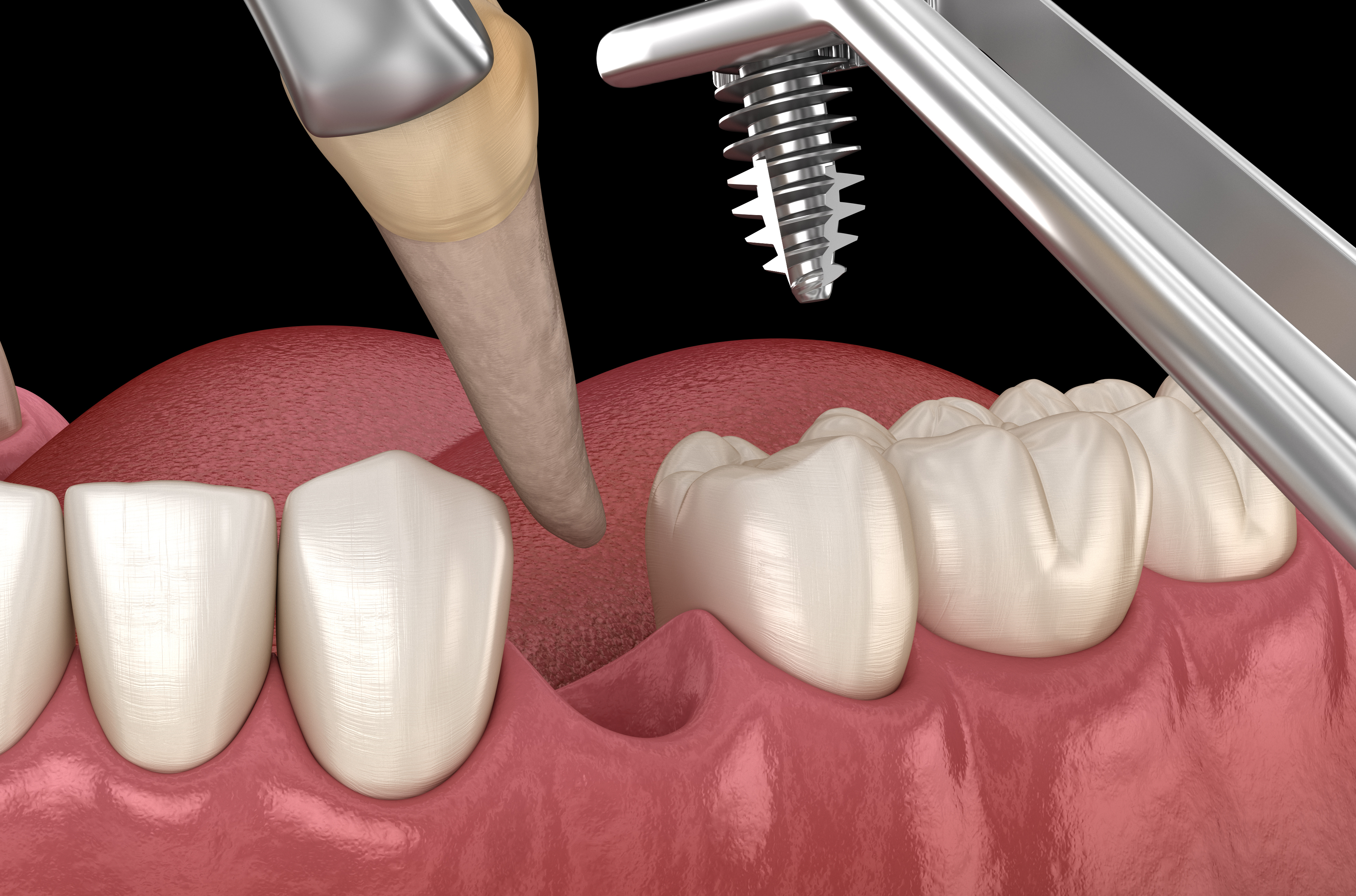
How you manage the socket defines the clinical outcome. After extraction, ridge resorption begins immediately. Socket management protocols are critical to preserve bone volume and enable predictable implant placement.
- Stabilization of the blood coagulum to support natural healing
- Preservation of ridge dimensions and tissue integrity
- Treatment approach guided by defect morphology and buccal bone condition
- Predictable healing across different socket types
- Preparation for immediate, early, or delayed implant placement

“I was so surprised by the result with NOVAMag® SHIELD, the socket was preserved very well and the buccal wall was completely reconstructed.” Alejandro Lanis
“A combination of the buccal bone thickness and the buccal bone dehiscence is guiding how I will perform my alveolar ridge preservation” Larissa Steigmann

Treatment approaches after tooth extraction
Socket management and immediate implantation are key strategies to preserve ridge architecture and support predictable implant outcomes.
Socket Management
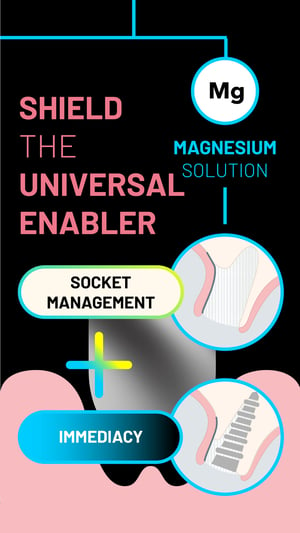
Socket management supports ridge preservation after extraction, helping maintain alveolar volume and create predictable conditions for implant placement.
- Stabilizes the blood coagulum and supports healing
- Helps preserve ridge volume and reduce resorption
- Enables early (4–8 weeks) or delayed (3–6 months) implant placement
Immediacy
Implant placement directly after extraction in selected cases with sufficient primary stability and favourable buccal bone conditions.
- Performed at the time of extraction
- Requires good primary stability and intact/controlled buccal bone
- Supports preservation of ridge contour and soft tissue aesthetics
Clinical Video Series: Navigating Socket Management
SOCKET TYPES
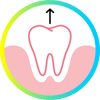
Socket Type 1
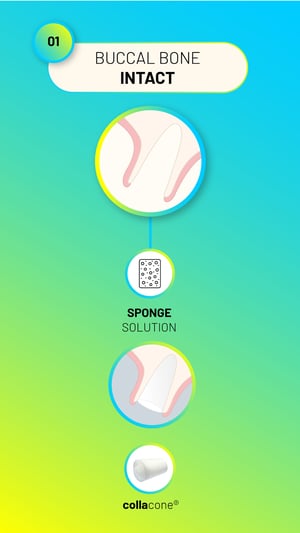
BUCCAL BONE INTACT
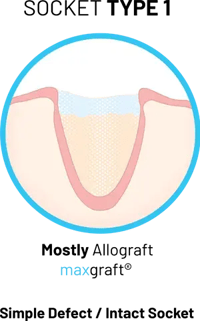
Socket type 1 presents with an intact buccal plate and fully contained socket walls, providing favourable conditions for predictable healing. In these cases, maintaining stability of the blood coagulum is key to preserving ridge dimensions and supporting natural bone regeneration prior to implant placement.
- Intact buccal bone enables contained healing and natural volume preservation
- Stabilization of the blood coagulum is critical for predictable bone regeneration
- Suitable for straightforward ridge preservation and flexible implant timing
Suggested approach:
Stabilization of the blood coagulum using collacone®


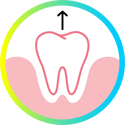
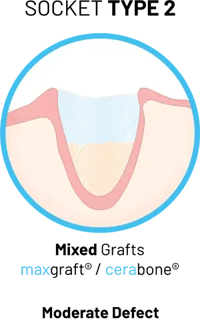
Socket Type 2
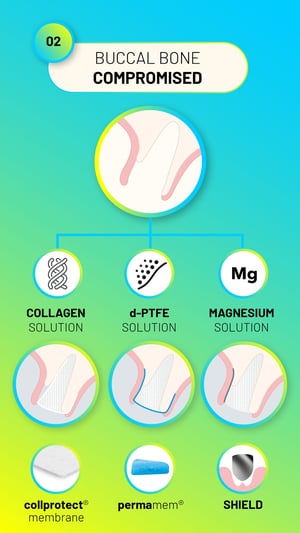
COMPROMISED BUCCAL BONE
Socket type 2 is characterized by a compromised buccal plate, such as dehiscence, fenestration, or a very thin bone wall. In these cases, maintaining the buccal contour becomes critical. A Regenerative approach with bone grafting supports space maintenance, stabilizes the coagulum, and enables predictable bone regeneration for future implant placement.
- Compromised buccal bone requires active preservation of ridge contour
- Bone grafting supports space maintenance and coagulum stability
Suggested approach:
Buccal wall preservation with bone grafting using a mixture of
cerabone®+HyA & maxgraft® +HyA and SHIELD
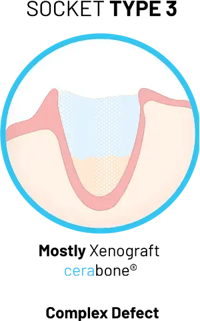
Socket Type 3
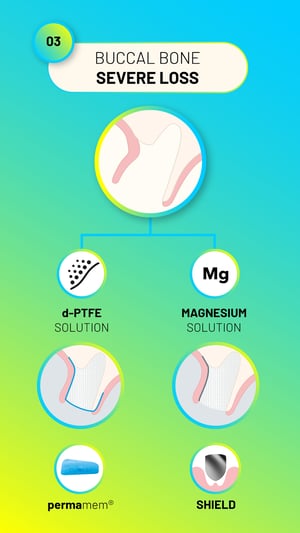
SEVERE BUCCAL BONE LOSS
Socket type 3 presents with significant loss of the buccal plate, often involving horizontal and/or vertical defects. These cases require a reconstructive approach to restore ridge architecture and re-establish sufficient bone volume for future implant placement.
- Severe defects require ridge reconstruction to restore ridge dimensions
- Space creation and stabilization are critical for predictable regeneration
- Establishes a stable foundation for subsequent implant placement.
Suggested approach:
Ridge reconstruction with early or delayed implant placement using cerabone®+HyA and SHIELD

For predictable socket preservation with SHIELD, cerabone® + HyA,
and other dental regenerative solutions, locate your distributor.
IMMEDIACY IN DIFFERENT SOCKET TYPES
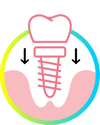
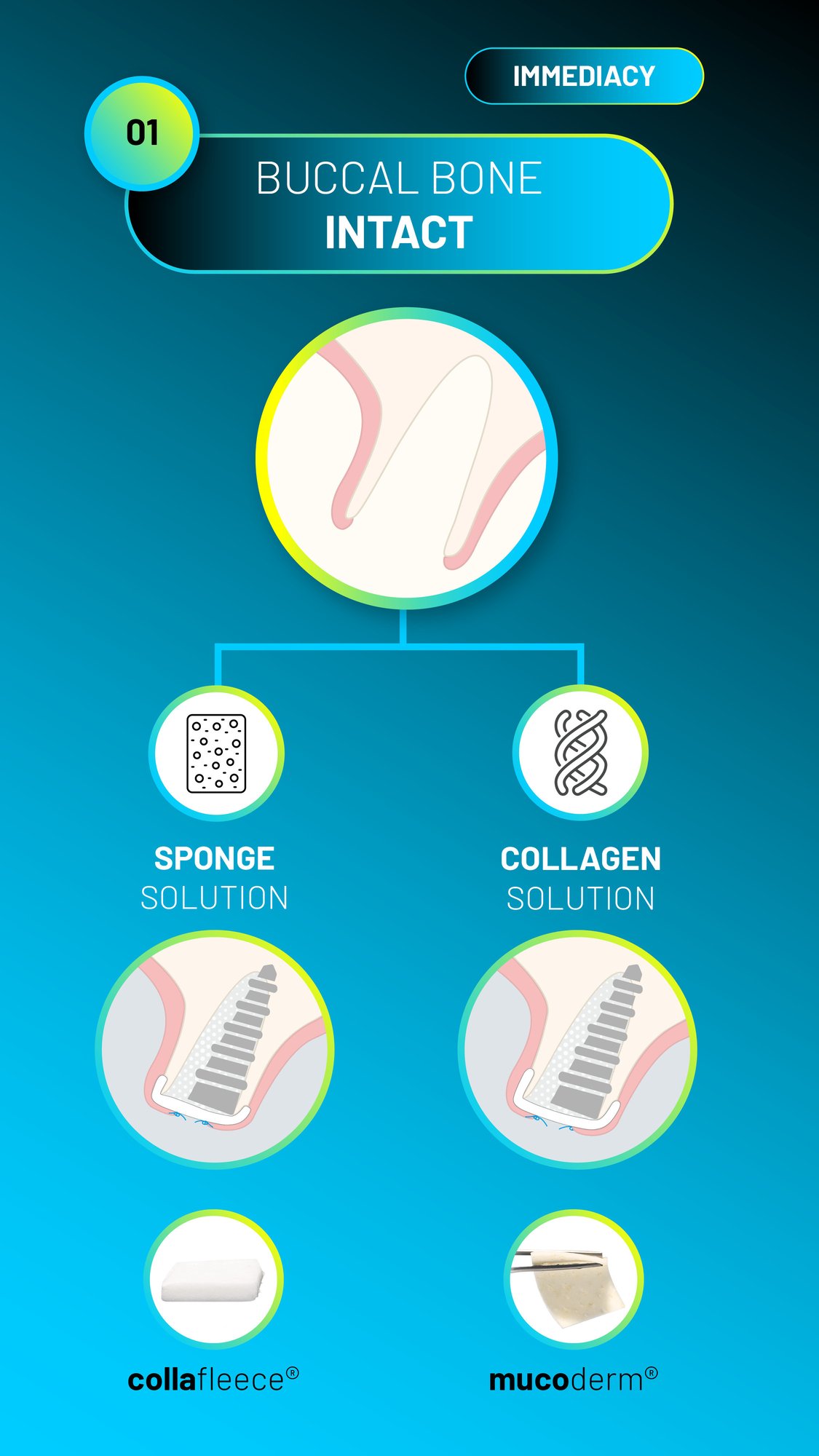
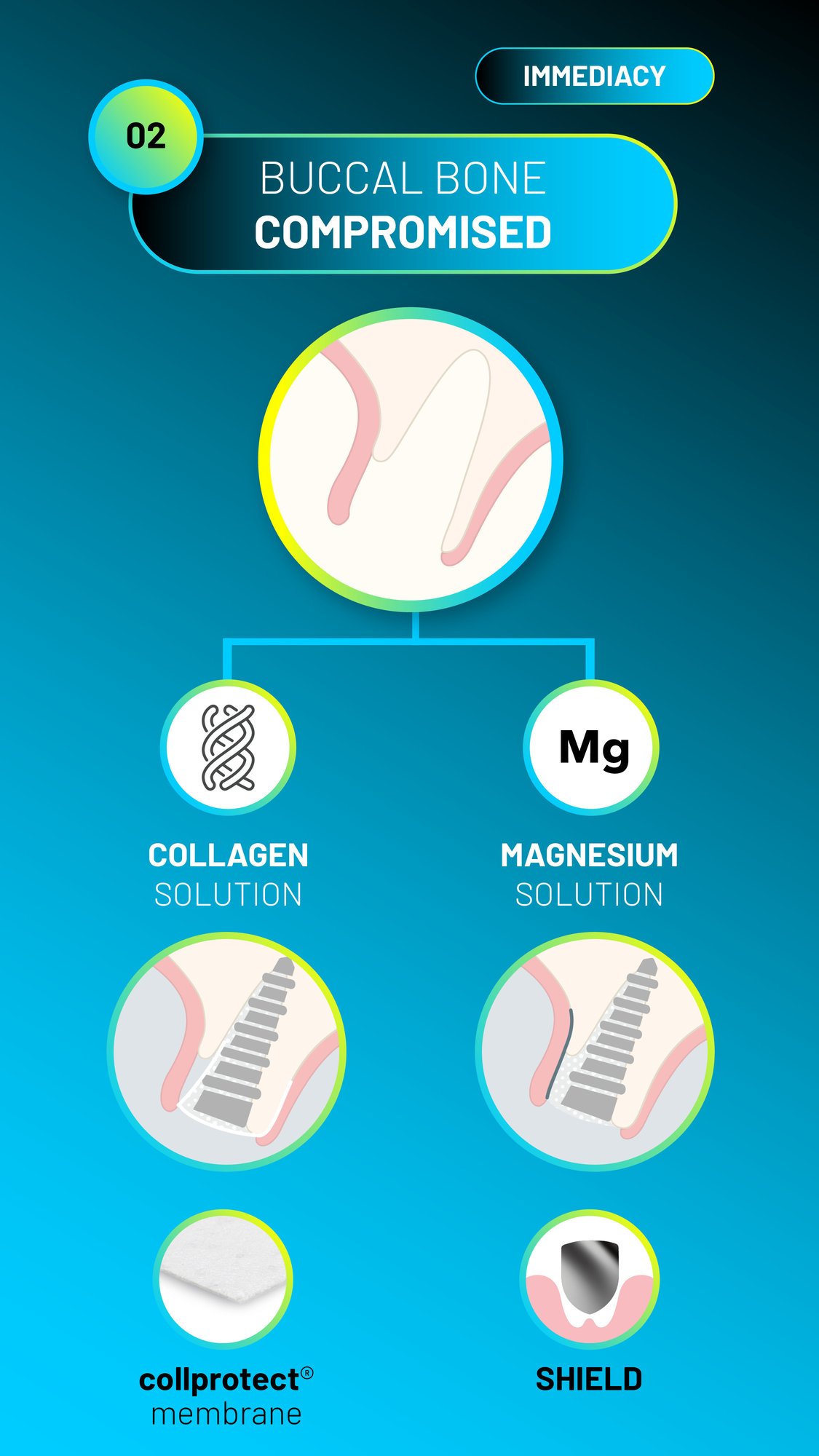
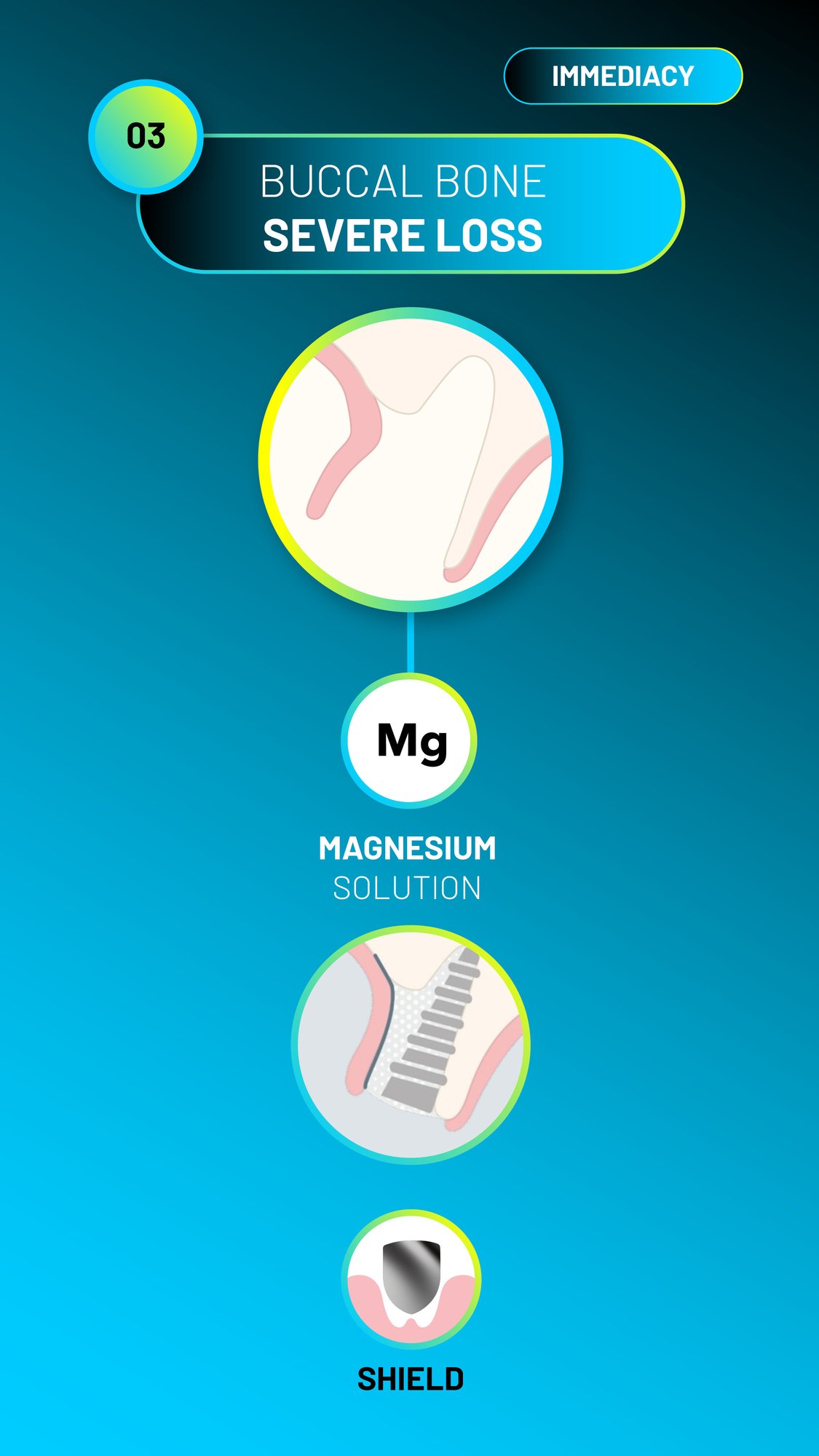
Immediate implant placement refers to insertion of a dental implant directly after tooth extraction. Primary stability of the implant and the condition of the buccal bone are key factors. In favourable cases, immediate placement combined with appropriate socket management may support preservation of the alveolar ridge and aesthetic tissue contours.
Socket Type 1
BUCCAL BONE INTACT

Socket Type 2
BUCCAL BONE COMPROMISED

Socket Type 3
SEVERE BUCCAL BONE LOSS

Why socket management matters after tooth extraction
Socket management supports preservation of alveolar ridge structure and creates predictable conditions for implant placement and long-term functional and aesthetic success.
PRESERVATION OF RIDGE VOLUME
Helps maintain hard and soft tissue dimensions after extraction, reducing physiological resorption and collapse of the alveolar ridge.
TAILORED CLINICAL APPROACH
Enables treatment decisions based on defect morphology—from intact buccal bone to severe bone loss—supporting individualized implant planning.
MINIMALLY INVASIVE REGENERATION
Modern socket management approaches enable effective regeneration with reduced surgical invasiveness, limiting flap elevation and simplifying treatment while preserving vascularization and patient comfort.
PREDICTABLE HEALING CONDITIONS
Supports stable clot formation and reduces early resorption, enabling predictable healing in compromised sockets.
IMPROVED LONG-TERM OUTCOMES
Creates optimal conditions for implant placement, supporting functional stability and aesthetic soft tissue integration.
IMMEDIATE IMPLANT PLACEMENT
Advanced socket management concepts can support immediate implant placement by preserving ridge architecture, maintaining stability, and creating favorable conditions for hard and soft tissue healing; even in compromised sockets.
Endorsed by Surgeons – Backed by Clinical Evidence.
Immediate implant placement using NOVAMag® Shield technique
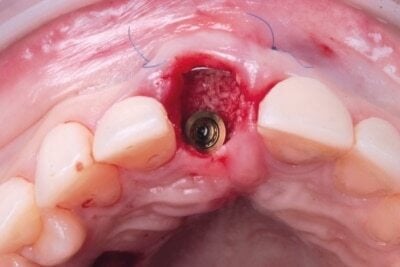
Clinical case by Dr. Erick Mota demonstrating extraction socket management in the anterior maxilla with guided implant placement and simultaneous buccal plate reconstruction using NOVAMag® SHIELD, connective tissue graft, and maxgraft® for optimal aesthetics and tissue stability.
Learn more
NOVAMag® SHIELD with immediate implant and temporization
Clinical case by Dr. Ahmed Aljumili demonstrating flapless immediate implant placement in the aesthetic zone using NOVAMag® SHIELD with cerabone® + HyA and CTG to preserve buccal contour and support soft tissue stability.
Delayed implant placement with NOVAMag® SHIELD and cerabone®
Clinical case by Dr. Alejandro Lanis illustrating socket management in the aesthetic zone using NOVAMag® SHIELD and cerabone® for buccal wall preservation and stable tissue outcomes, enabling predictable delayed implant placement.
For predictable socket preservation with SHIELD, cerabone® + HyA,
and other dental regenerative solutions, locate your distributor.
What Leading Clinicians Say
“I find that connective tissue heals better with cerabone®+HyA. In a case of alveolar ridge preservation, the most coronally part of the socket was inflammation-free after two weeks.”
Dr. Alberto Gómez Menchero
Spain
“Reconstructing a type 3 socket predictably is not simple, NOVAMag® SHIELD makes it possible.”
Dr. Alejandro Lanis
Chile
“With permamem® in an open healing procedure I have an attractive approach to regenerating the alveolar socket while keeping the natural soft tissue architecture. I have experienced excellent tissue compatibility of this membrane with almost no plaque accumulation.’’
Dr. Marius Steigmann
Germany
“I like permamem®, it's the perfect membrane for socket preservation. Easy to handle, doesn't require a flap elevation, can be safely left completely exposed, allows blood clot stabilization for accelerated healing and doesn't need a second surgery for removal.”
Prof. Piero Papi
Italy
“I am sure that the Magnesium Shield Technique will become a new standard of care.”
Dr. Massimo Frosecchi
Italy
“The membrane provides the shape to the regenerated bone and adapts perfectly well to our defect.”
Dr. Erick Mota
Dominican Republic
Clinicians’ Most Asked Questions
Tooth OUT. What NOW? +
After a tooth extraction, the surrounding bone naturally undergoes resorption if no intervention is performed. This physiological process can lead to a significant loss of volume, particularly on the buccal aspect, potentially compromising future implant placement and aesthetic outcomes. Socket management helps preserve the alveolar ridge, maintaining the necessary bone structure for predictable and successful rehabilitation.
Why should socket management be adapted to defect morphology? +
Socket management should always be linked to the specific defect morphology, as the number of remaining socket walls and the integrity of the buccal bone significantly influence healing outcomes. Contained defects generally allow for simpler approaches with minimal intervention. Compromised sockets require more advanced techniques, including the use of membranes and grafting material. Adapting the treatment strategy to the defect type ensures optimal graft stability, supports predictable bone regeneration, and improves both functional and aesthetic results.
What are the different socket types? +
Extraction sockets are commonly classified based on the integrity of the surrounding bone walls, particularly the buccal plate. A frequently used classification distinguishes between intact sockets (Type 1), sockets with compromised buccal bone (Type 2), and sockets with severe defects or missing walls (Type 3). This classification is essential because it directly guides the treatment approach, ranging from simple socket preservation in intact cases to more advanced regenerative procedures in compromised defects. Understanding the socket type helps clinicians choose the most appropriate technique and biomaterials for predictable outcomes.
How do you choose the right socket management approach for each clinical situation? +
The choice of approach depends on defect morphology, treatment goals, and the desired level of intervention. In simple cases, a minimally invasive solution using collacone® may be sufficient to stabilize the clot. When long-term volume preservation is required, using cerabone® + HyA provides excellent stability.
For more complex defects, different concepts can be applied: a collagen-based approach with collprotect®, a non-resorbable d-PTFE barrier using permamem®, or a magnesium-based solution with NOVAMag® SHIELD for added structural support. Botiss portfolio allows clinicians to select the most appropriate and efficient solution for each socket type.
What are the advantages of using NOVAMag® SHIELD in socket management? +
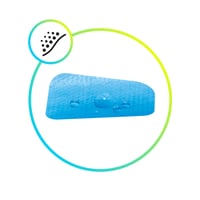
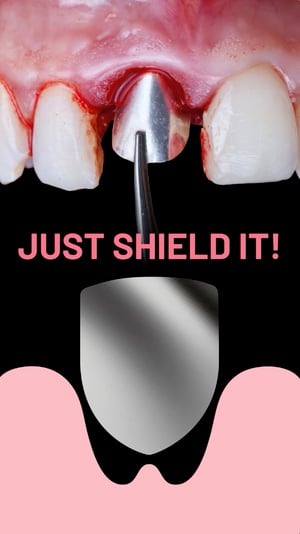
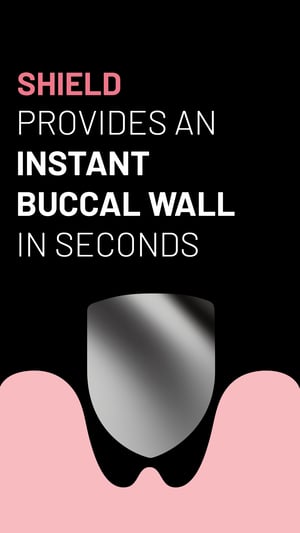
NOVAMag® SHIELD offers several key advantages due to its unique combination of rigidity and resorbability. As a metallic shield, it provides structural stability that helps maintain the regenerative space and preserve the buccal contour, supporting predictable bone formation. Its rigidity also makes it easier to position, particularly when tunneling between the periosteum and the remaining bone.
In addition, it promotes angiogenesis, contributing to a favorable healing environment. The technique is minimally invasive, as it does not require flap elevation or fixation, simplifying the surgical procedure. Finally, because the material is resorbable, there is no need for a second surgery for removal, improving patient comfort and overall treatment efficiency.
Can an implant be placed immediately after extraction? +
Yes, immediate implant placement is possible in selected cases with sufficient primary stability and absence of infection. However, in compromised sockets or when stability cannot be achieved, a staged approach with prior socket preservation is traditionally recommended.
Innovative solutions such as the NOVAMag® SHIELD are opening new possibilities, enabling immediate implant placement even in challenging or compromised sockets by providing additional stability and supporting hard tissue regeneration.

SETTING THE STANDARD IN SOCKET MANAGEMENT
Choose the Products for your Solution

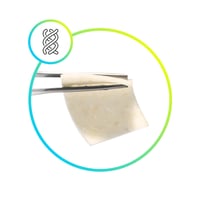
collacone®
Minimally invasive
Preservation made easy.
Socket Management
Socket Type 1
collprotect® membrane
Reliable collagen barrier
for protected healing.
Socket Management & Immediacy
Socket Type 2
collafleece®
Resorbable collagen support
for hemostasis and healing.
Socket Management
Socket Type 1
mucoderm®
Soft tissue contour and
long-term esthetics.
Socket Management & Immediacy
Socket Type 1 & when soft tissue augumentation is needed.
permamem®
Non-resorbable barrier
for maximum control.
Socket Management
Socket Type 2, 3
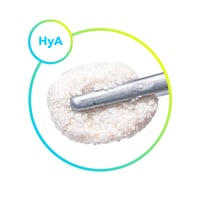
cerabone® +HyA
Volume-stable bone graft
for enhanced regeneration.
Socket Management & Immediacy
Socket Type 1, 2, 3
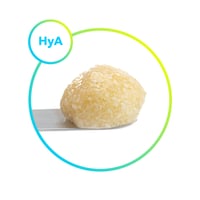
maxgraft® +HyA
Allograft for
natural bone remodeling.
Socket Management & Immediacy
Socket Type 1, 2
MAGNESIUM SOLUTION
SHIELD SIMPLIFIES SOCKET MANAGEMENT
Use in Socket Type 2 and 3, including immediacy workflows


WHAT TO USE BELOW
Choose the right approach according to your defect.


botissFINDER
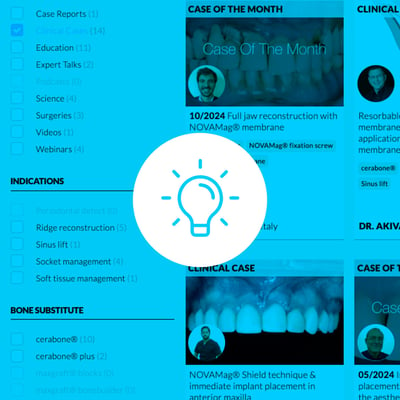
To explore more clinical cases in socket management and discover how botiss biomaterials are applied across different socket types and treatment approaches, visit our comprehensive case library here.Dental Expert Podcast
Explore botisstalks – the dental podcasts featuring international experts sharing practical insights, clinical experience, and the latest perspectives on socket management, regeneration, immediacy, and advanced treatment concepts.
For predictable socket preservation with SHIELD, cerabone® + HyA,
and other dental regenerative solutions, locate your distributor.
botiss biomaterials GmbH
Hauptstr. 28 , 15806 Zossen,
Germany
pm@botiss.com
© 2026 botiss biomaterials GmbH

%20(1).jpg?width=1886&height=521&name=Header_Mobile_Socket-Management%20(1)%20(1).jpg)